
Short answer: Most often, ageing seals inside the gearbox’s hydraulic control system have hardened. When the gearbox is cold, those seals are at their stiffest, fluid leaks past them, pressure drops and the gear engages late with a jerk. As the gearbox warms up the seals soften a little, so the problem fades. It is common in older cars and in cars that sit in hot traffic every day.
Not sure this is your problem? Check all 62 automatic gearbox symptoms in our Transmission Problems Checker: the likely cause, what to check first, and whether KM+ AT Fix-IT can fix it.
What it feels like
- You shift to D or R on a cold morning and wait a few seconds, sometimes longer, before the car moves.
- The first few gear changes are hard or bang into place, then smooth out after 5 to 15 minutes.
- The engine revs rise but the car is slow to pick up, especially uphill.
Why cold makes it worse
An automatic gearbox (AT, CVT or wet-clutch DCT) changes gear with oil pressure. Rubber seals and O-rings hold that pressure inside the valve body and clutch pistons. Years of heat cycles make the seals hard and less elastic. Cold fluid is also thicker and flows more slowly. Together, hard seals and cold fluid mean the gearbox cannot build pressure fast enough, so the clutch packs engage late and with a jolt.
Other causes to rule out
- Low or very old fluid. Check the level if your gearbox has a dipstick, and ask when the fluid was last changed.
- A faulty solenoid or valve body. Usually brings a warning light or a stored fault code.
- Worn clutch plates. The gearbox also slips when warm, and the fluid may smell burnt.
- Worn engine or gearbox mounts. You hear a clunk when shifting, but the gear itself engages on time.
Go to a workshop first if
- The car will not move in any gear.
- The fluid smells burnt or has metal particles in it.
- A gearbox or check-engine warning light is on.
- It slips badly even when fully warm.
No additive can repair broken parts, worn clutches or electrical faults, so a workshop check is the honest first step in these cases.
How to fix it without opening the gearbox
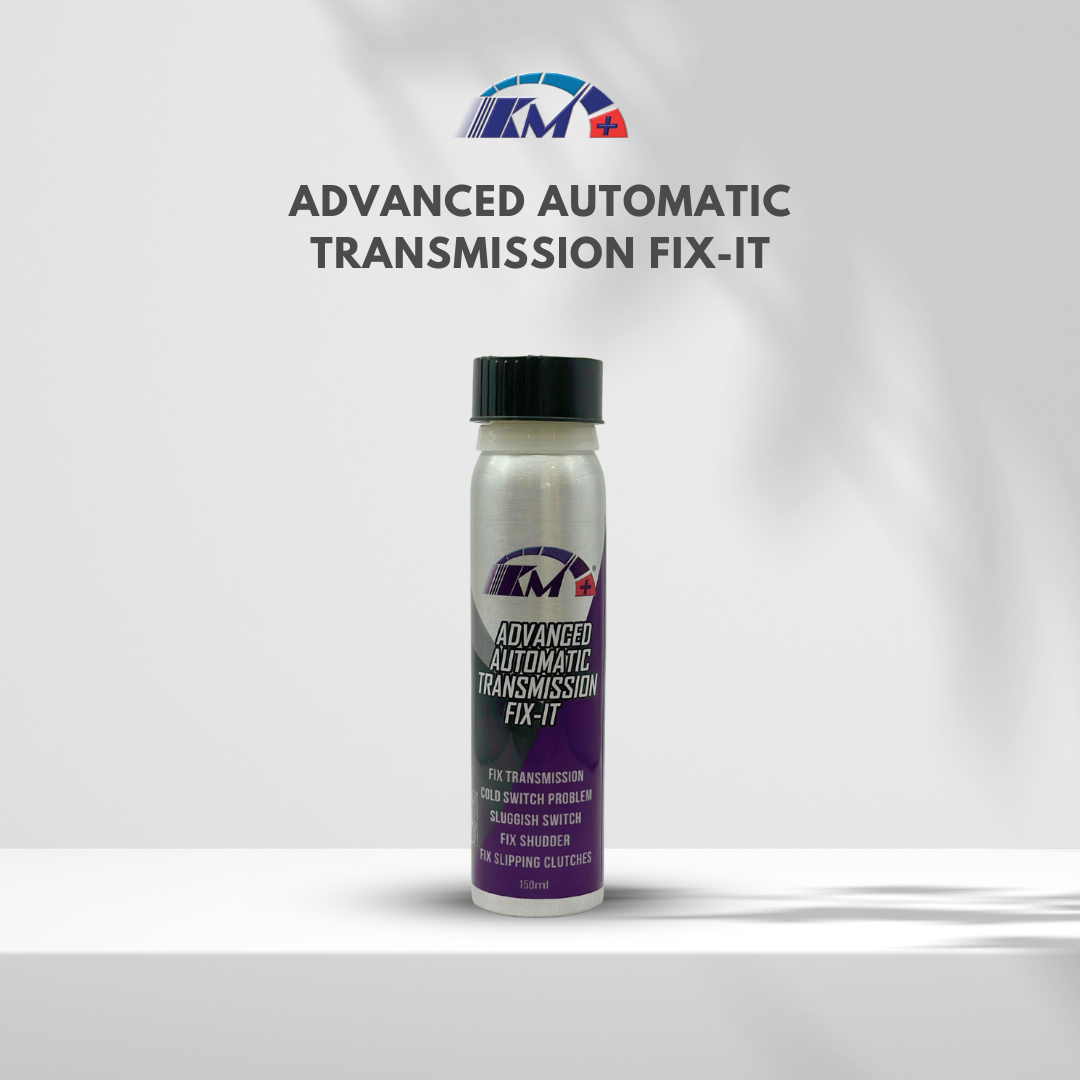
If the symptoms are worst when cold and there is no warning light or burnt smell, the cause is very likely hardened seals. KM+ AT Fix-IT is a seal revitalizer: it restores the elasticity of the seals in the hydraulic control system so they hold pressure again. It is not a seal softener or stop-leak, so the seals do not swell and the result lasts.
- Add one 150 ml bottle per 4 to 6 litres of transmission fluid (2 bottles if the gearbox holds more than 6 litres), then drive normally.
- It usually works within a few hours to 48 hours.
- Suits conventional automatics (4 to 9 speed), CVTs, wet-clutch DCT/DSG and hybrid automatics. It is not for dry-clutch DCTs.
- Since 2019, KM+ has sold more than 200,000 bottles, with fewer than 200 unresolved cases reported.
Once the gearbox shifts smoothly again, KM+ Nano ATF Treatment (or KM+ Nano CVT Treatment for a CVT) at each service helps keep it that way.
Common questions
Is it safe to keep driving?
A late or jerky engagement when cold is not an emergency, but it gets worse over time and wears the clutches. Have it looked at soon. Stop driving if the car will not move, smells burnt or shows a warning light.
Will a fluid change fix it?
Fresh fluid helps if the old fluid was very degraded, but it does not restore hardened seals. Many drivers find the jerk comes back after a fluid change for that reason.
Does it happen in CVTs too?
Yes. A CVT also relies on hydraulic pressure, so hardened seals cause the same slow engagement and jerk when cold.
Not sure which applies to your car?
Send KM+ your car make, model, year, mileage and what you notice. We will tell you honestly whether a KM+ product will help, or whether you need a workshop first.
Leave a Reply