
Short answer: Blue or blue-white smoke means the engine is burning oil. Thin white vapour on a cold morning that disappears is just condensation. Thick white smoke that smells sweet, with coolant going down, can mean a head gasket problem. Black smoke means too much fuel or incomplete combustion, often from carbon deposits, dirty injectors or a blocked air filter.
Blue or blue-white smoke: the engine is burning oil
Oil is getting into the combustion chamber and burning with the fuel. You may also need to top up engine oil between services. When the smoke appears tells you where the oil is coming from:
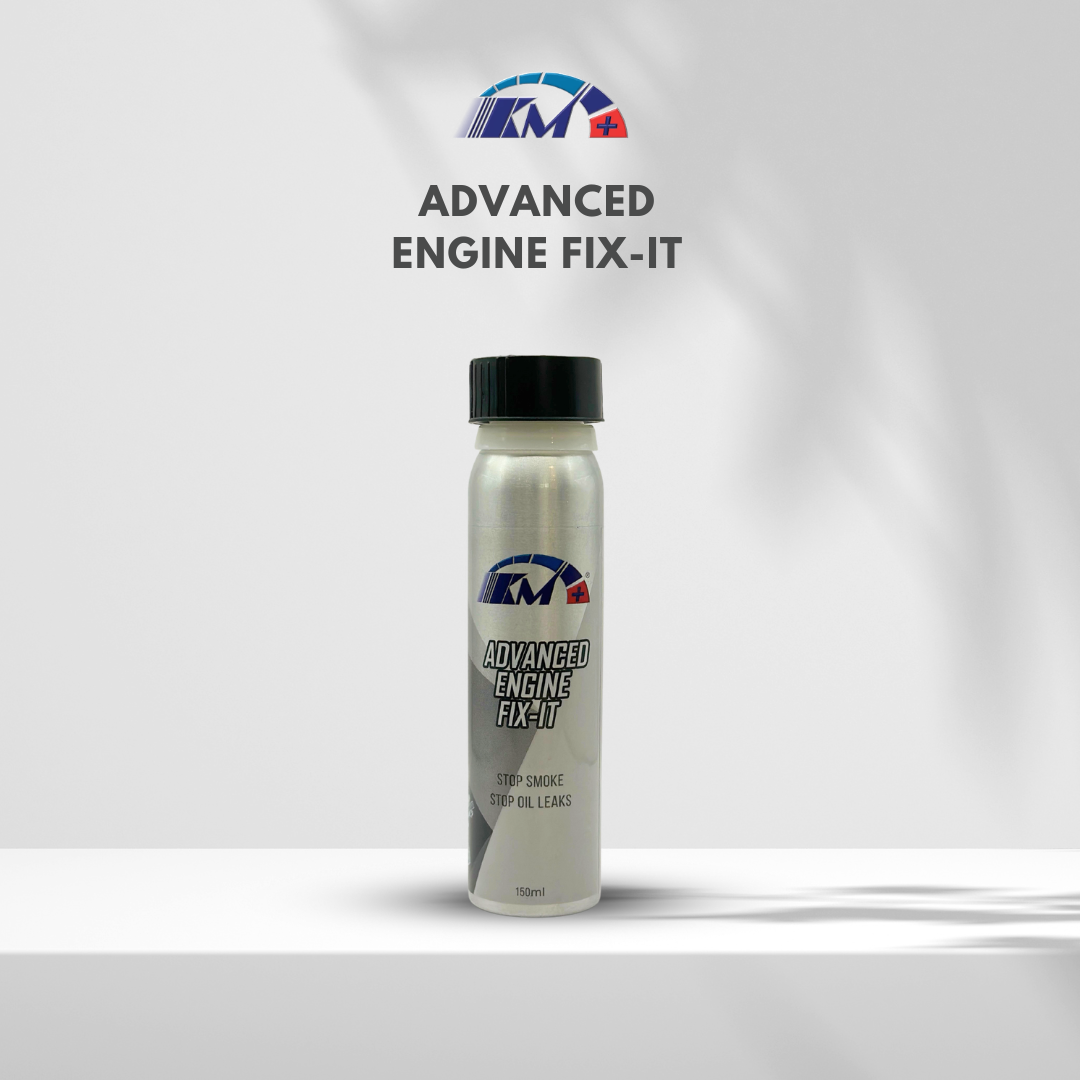
- A puff at start-up that clears quickly: usually hardened valve-stem seals letting oil drip into the cylinders overnight. KM+ Engine Fix-It revives the elasticity of the seals and also helps with external oil leaks.
- Smoke that continues, especially when accelerating, with heavy oil use: usually piston rings stuck with carbon. KM+ REVIVE cleans the burned carbon from the rings so they seal again.
- Mild oil use from scratches or micro leaks, with a rougher engine: KM+ REVO CeraSmooth reduces friction and oil consumption.
White smoke: harmless vapour or a head gasket
Thin white vapour on a cool morning that disappears once the engine warms up is water condensing in the exhaust. It is normal.
Thick white smoke that keeps coming, smells sweet and goes with a falling coolant level points to coolant entering the engine, often a head gasket. That needs a workshop, not an additive. Stop driving if the temperature gauge rises.
Black smoke: too much fuel
Black smoke means fuel is not burning completely. Common causes are carbon build-up in the combustion chamber, dirty injectors, a clogged air filter or a faulty sensor. Diesels also smoke black when overloaded.
- Check and replace the air filter first. It is cheap and often the cause.
- Clean the fuel system: KM+ Nano Decarbonizer deep-cleans injectors and combustion chambers over one tank. KM+ Injector Cleaner cleans the fuel pump, injectors and intake valves.
- Keep it clean with KM+ Advanced Fuel Additives at every refill.
- On a diesel with a DPF warning light, a trained workshop can clean the filter with KM+ Nano DPF Cleaner in about an hour.
Quick guide
| Smoke colour | Most likely cause | What to do |
|---|---|---|
| Blue puff at start-up | Hardened valve-stem seals | Engine Fix-It |
| Blue smoke when accelerating, heavy oil use | Stuck piston rings | REVIVE, then fresh oil |
| Thin white vapour, cold morning | Condensation | Nothing, it is normal |
| Thick white, sweet smell, coolant loss | Head gasket | Workshop |
| Black smoke | Carbon, dirty injectors, air filter | Air filter, Decarbonizer or Injector Cleaner |
Common questions
Can I keep driving with blue smoke?
Usually yes in the short term, but keep the oil topped up and check it weekly. Low oil can damage the engine far more than the smoke itself.
Will thicker oil stop the smoke?
It can reduce it a little, but it does not fix the seals or rings, and it can make cold starts harder on the engine.
Not sure which applies to your car?
Send KM+ your car make, model, year, mileage and what you notice. We will tell you honestly whether a KM+ product will help, or whether you need a workshop first.
Leave a Reply